I liked the pictures and graphics that described the different fonts used in print advertising and how each font differs. I liked that the reading included a page devoted to showing the visual difference between a bunch of different fonts because it gets a little hard to visualize them mentally if they aren't displayed all together like that.
I was most interested in the fonts used after 1990 for the explicit purpose of on-screen use. I thought about the evolution of the personal computer, and I remembered things like the PalmPilot and LeapPad that I used as a kid. I also thought about the ereader and Amazon's development of the e-paper technology and its improvement on the readability of the Kindle, especially in its inclusion of customizable fonts on the Paperwhite. I'm more of a traditional book reader myself, but my parents bought a Paperwhite over the summer and I used it a lot when we went to the beach. I found it to be a very useful device and once I finished a book I was able to instantly download a new one from my county library, which was easily my favorite feature.
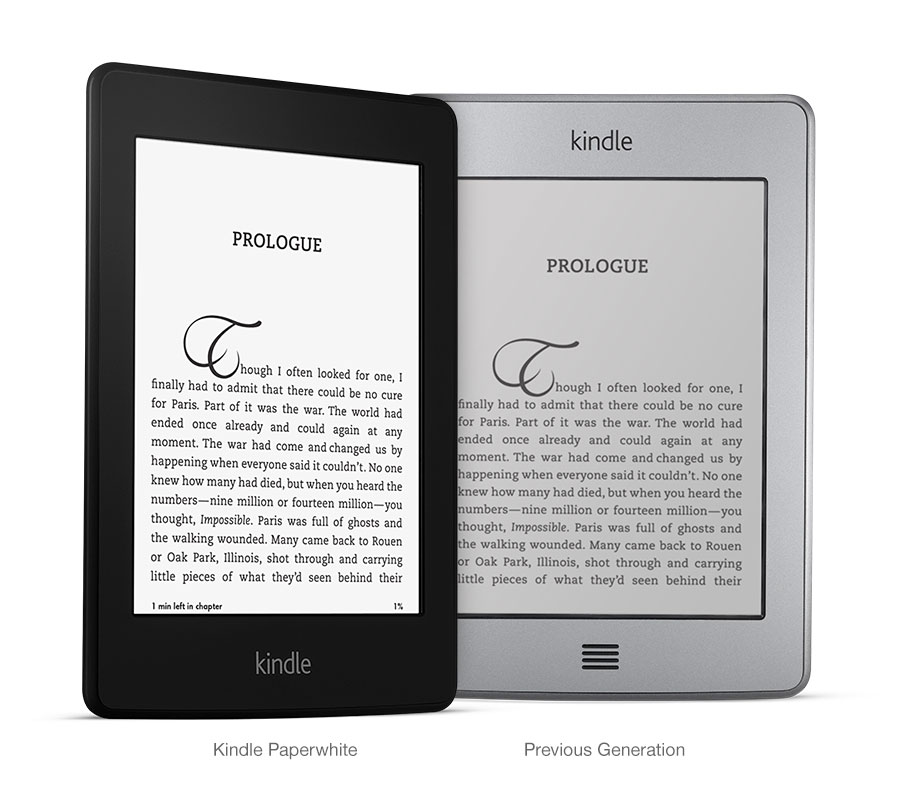
My ability to read the family Paperwhite was made possible by the grassroots evolution of fonts and printing that Lupton talks about in this reading. I never would have thought to look something like that up on my own because I never considered fonts to be that big of a deal, and now I know some of the implications of their use and how to accurately describe them in my writing.

No comments:
Post a Comment